




 Inglés (pdf)
 Articulo en XML
 Referencias del artículo
 Traducción automática
 Enviar articulo por email
 Citado por SciELO
  Similares en
SciELO
Similares en
SciELO 
 Permalink

Introduction
Humans and their environments have been profoundly affected by microorganisms since the origin of life. Most materials used in the construction of buildings come from the earth, and microorganisms play an important role in several aspects of construction. The intersection of architecture and biotechnology has led to the development of an array of creative solutions resulting from the use of microorganisms in building processes. However, architecture focuses more on the design of buildings and ignores the particularities that can be obtained from the biogenetic processes of microbial life.
In environmental sciences, biotechnological materials play an important role because they contribute to the improvement of durability and sustainability (Pozo, 2021). The most significant challenge in managing microorganisms is the environmental damage caused by the construction industry. In recent years, studies on biotechnology-based materials have increased. Advances in biomaterials are of the utmost importance for improving construction systems and mitigating the ecological impact of existing techniques. Unfortunately, most of the findings of the biotechnologists involved in the development of biomaterials remain in the prototype phase without being applied to the construction industry. Using their expertise in managing living organisms, such as bacteria, fungi, and algae, biotechnologists contribute to construction sciences by enhancing materials that use living organisms (Martin Manzanares, 2017). Since these methods require less energy and produce more durable materials, the main advances in this field are related to environmental protection and sustainability. Although biomaterial alternatives are typically applied in architecture from an engineering perspective, studies on aesthetic issues or design processes are scant, which significantly limits their application.
Meanwhile, in the study of architectural heritage, microorganisms have persisted for decades because of their biodeterioration effects and the risks they pose to the conservation of historical buildings. On the other hand, some prokaryotic unicellular organisms have been proven capable of restoring biodiversity and healing ecosystems, in addition to supporting the regeneration of buildings (Pozo, 2021).
The recent outbreak of SARS-CoV-2 has demonstrated the existence of an “invisible city” of microorganisms that live within our homes and on our streets (Encinas et al., 2021). Advances in genetic engineering have led to the identification and analysis of these microbial communities and the proposal of multiple solutions in terms of the environment and care in open and enclosed spaces. However, it remains unclear which microorganisms affect or reinforce construction materials.
Although there are literature reviews on microorganisms in construction, these studies have only addressed a select group of microorganisms. To provide a more comprehensive overview, this article discusses the advances reported in the last decade on the repair or destruction of buildings by microorganisms. By identifying the studies that have made significant advances in this area, we highlight the prospects for future research and innovation in this field.
Materials and methods
A documentary review of English and Spanish databases was conducted to identify recent findings on the microorganisms involved in construction in North and Latin America. A search for documents was conducted using three key terms in English and Spanish: “microorganisms,” “biomaterials,” and “bioarchitecture.” The total number of articles from Google Scholar (16,300 results), the Web of Science (8,727 results), and the National Center for Biotechnology Information (NCBI, 983 results) were reduced by discipline to those related to architecture, biotechnology, and environmental engineering (387 results). Among the selected documents, those related to medicine, pharmacology, and basic chemistry were discarded (323). The selected texts (64) were classified based on their main architectural implications in a subsequent taxonomic process. The categorization of this work was determined by the biotechnological use of the most documented and studied microorganisms, highlighting their importance as repairing agents or generators of new materials, as well as the microorganisms responsible for the deterioration of construction materials. Note that, although other categories exist, only these are discussed in this paper because they are the most relevant to architecture (Table 1).
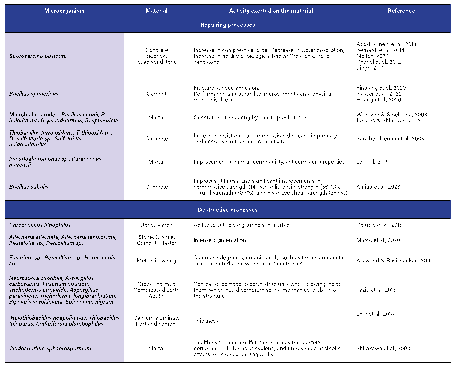
Results
The results were categorized according to the microorganism classification. First, we describe the implications of microorganisms that facilitate and reinforce construction processes as well as those that have a regenerative effect and provide environmental benefits in cities. Second, we discuss investigations that identify the degradation functions of certain microorganisms in buildings. The third section discusses the current perspectives of biotechnology and architecture aimed at (a) identifying self-repairing microorganisms in buildings, (b) conducting tests in real environments, and (c) devising alternatives to stop biodegradation in buildings.
Microorganisms that contribute to the preservation of architecture and cities
Construction utilizes a wide range of bacteria, for instance, microbes that induce the precipitation of minerals, such as calcium carbonate, both naturally and in the laboratory. These microbes may be applied to the consolidation of sand, and to the strengthening of partitions and mortars to increase their resistance. As concrete is one of the most commonly used construction materials worldwide, the mineralization of concrete by microorganisms to increase its resistance can be a more profitable and environmentally friendly strategy than industrial processes and prefabricated materials.
Sporosarcina pasteurii bacterial cells were added to a mortar mixture in which sand and cement were mixed in a ratio of 3:1. Consequently, the compressive strength of the mortar increased by 33% (Abo-el-Enein et al., 2013). The improvements in resistance and water absorption were due to the growth of calcite crystals between the pores of the cement and sand mixture (Figure 1). Hence, it is believed that the bacterial activity modifies the mortar through the deposition of a new calcite material between the pores, altering the physical-mechanical properties of compression resistance and water absorption; therefore, bacterial concentrations decrease water absorption and increase material resistance.

Source: Bibi Tinsley. 2017. CCO Public domain
Figure 1 Growth of calcites and crystals with a self-healing effect
The same ureolytic bacteria (S. pasteurii) were also shown to increase the compressive strength, water absorption, and chloride permeability of concrete in another study. The cement was replaced with 5% and 10% microsilica at three specific bacterial concentrations. In tests conducted between 28 and 91 d, S. pasteurii bacteria were observed to significantly reduce porosity, increase compression capacity and water absorption, and accelerate concrete permeability (Chahal et al., 2012). Concrete is improved because bacterial cells are deposited on its porous surfaces. Consequently, concrete chloride has reduced permeability owing to the calcites deposited in the pores, as bacteria directly affect the precipitation of calcium carbonate.
The cementation of sand occurs through the addition of nutrients and bacteria, which result from calcite precipitation processes. Through these biotechnological processes, more sustainable materials can be developed in the form of biobricks. Several treatments and tests have been effective in preparing biobricks, including increasing strength (1 MPa-2 MPa), rigidity, resistance, and calcium content by treating them with bacteria and cementing media and sands (Bernardi et al., 2014).
Biomass, a company founded by the American architect Ginger Krieg, produces biological bricks. Sand, bacteria, calcium chloride, and urea are used to “cook” these bricks in a chained chemical reaction in which bacteria link the grains of sand. This produces a biobrick with resistance characteristics similar to those of conventional bricks (Melton, 2022). In addition, the architects Thomas Kosbau and Andrew Wetzler used S. pasteurii bacteria to solidify sand during the construction of road sandstone. To counteract the high CO2 emissions generated by asphalt mass paving, these architects have added these bacteria to utilize the solidification of sand within 24 h. “Sand.Stone.Road” proposes organic materials as alternatives to asphalt. Thus, the use of these microorganisms contributes to mitigating the negative effects of asphalt owing to its high temperatures and the pollution resulting from the oil industry, which produces asphalt (Singh, 2010). Asphalt is derived from chemicals that have adverse health effects.
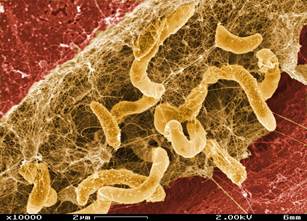
The use of photosynthetic microorganisms for architectural finishes and envelopes has become a major innovation in recent decades because of their aesthetic qualities, and their economic and ecological advantages (Figure 2). Most of these advances have been achieved in laboratory settings with little exploration of actual environmental conditions. Studies conducted with microorganisms on concrete outside the laboratory revealed that environmental conditions considerably influence microbial colonies more than their intrinsic properties. The analysis of microbial colonies is related to climatic conditions, such as precipitation, average monthly temperature, and air quality in terms of NOx, SO2, CO, and O3; however, materials based on ordinary Portland cement (OPC) demonstrated greater colonization based on biodiversity and the size of algal colonies (Manso et al., 2015).
Source: Courtesy of Pacific Northwest National Laboratory
Figure 2 Desulfovibrio desulfuricans in the biofilm matrix
These findings demonstrate the importance of environmental conditions when cementitious substrates are used to promote biological growth. There have been dual efforts in this area of microorganisms. On the one hand, advances are being made in bioreceptivity to stimulate the growth of microorganisms. Second, the objective was to investigate the colonization processes in cementitious materials with varying degrees of bioreceptivity under a wide range of environmental conditions.
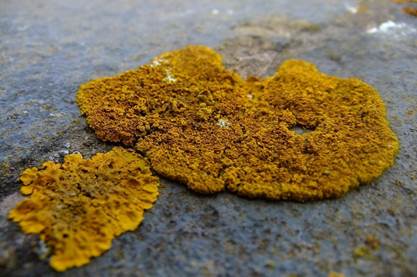
While human activities negatively affect biodiversity, microbial activity can neutralize carbon dioxide and positively impact nature, thus favoring environmental balance through the inclusion of microorganisms on the surfaces of construction materials. By incorporating bioreceptive materials into architectural design, microscopic green facades can be created by creating biofilms on building surfaces (Stohl et al., 2023). In 2014, the Polytechnic University of Catalonia patented a biological concrete with the capacity to grow naturally and rapidly in pigmented organisms. This material offers environmental, thermal, and ornamental advantages over similar construction solutions in Mediterranean climates (Figure 3).
Microorganisms that contribute to the degradation of architecture and cities
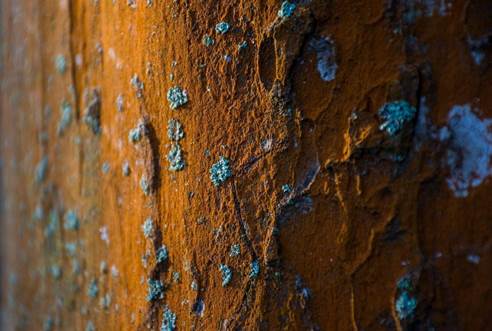
Microorganisms can affect construction materials in various ways. For example, metal corrosion results from the changes in electrochemical conditions caused by microbiological activity in the environment adjacent to the metal surface. In the case of biofilms, environmental conditions directly affect their development, as they are microbial colonies that reproduce utilizing extracellular polymeric substances, which are determined by factors, such as humidity, physiology, and the type of bacteria that constitute the microbial community. In addition, microorganisms release insoluble products that alter the physicochemical conditions of the surface, such as ion concentration, pH modification, and oxide reduction. Furthermore, the degree of oxidation is affected by the type of metal and the microbial community established on its surface (Figure 4).
Additionally, fungi can establish themselves on metallic and mineral surfaces, creating a microenvironment in which deterioration occurs. Corrosion is caused by the production of organic acids by fungi, which perform vital functions in the processing of nutrients and breathing. These acids result in the destabilization of oxygen-metal bonds and the formation of metabolites, such as oxalate and oxalic acid, from metals.
A corrosion reaction occurs when metallic materials interact with microbes, such as bacteria, fungi, and algae. Microorganisms adhere to metal surfaces as a biofilm with metabolic capacity, in which the cells attach with increased density until they can separate from the outer layer of the biofilm (Alasvand & Ravishankar, 2014). In the corrosion process, this biofilm protects microorganisms from threats, such as biocidal organisms and antibiotics, but also degrades metals owing to the concentration of corrosion inhibitors and corrosive substances.
Since the 20th century, concrete has been the most widely used material in construction, and is available in a wide range of variations based on the concentration of additives used. Concrete is primarily composed of cement, which has an adverse environmental impact owing to the emission of 100 kg of CO2 per ton. Owing to the exposure to bacteria, fungi, algae, lichens, diatoms, and mosses, the durability of concrete and alternatives for preventing degradation are among the most important aspects of sustainability. Concrete deterioration and the speed at which it occurs are heavily influenced by environmental factors and microorganisms because wear is accelerated by high concentrations of humidity, carbon dioxide, and salt or chlorine ions produced owing to sulfates and significant amounts of acids.
Sulfuric acid corrosion is one of the most dangerous types of corrosion in concrete, because it is caused by films formed by acidophilic sulfur-oxidizing bacteria that diffuse through the concrete matrix, causing corrosion by solubilizing the minerals contained within. The deterioration process consists of the formation of ettringite crystals, whose expansive effect leads to fractures in the concrete and a loss of structural strength as a result of the dissolution of portlandite and calcium silicate. The physical properties of concrete deteriorate with the addition of gypsum, resulting in a loss of compressive strength, reduced permeability, and reduced durability.
The type of concrete also plays a major role in determining how quickly concrete deteriorates when exposed to microbial activity. Researchers have observed that concrete made with OPC degrades more rapidly than calcium aluminate cement (CAC) concrete in sewer systems exposed for five years to microorganisms, such as sulfur-oxidizing bacteria. This indicates that neutrophilic sulfur-oxidizing bacteria could be deposited more easily in OPC microstructures because of their greater acid-neutralization capacity (Lors et al., 2018).
Fungi are microorganisms that are normally present in most construction materials. A study aimed to identify how fungi affect concrete environments and the types of fungi that occur. A Cladosporium sphaerospermum test microorganism was used to collect samples from 41 buildings in São Paulo, southeastern Brazil. The results of this study demonstrated that environmental factors are important in determining the behavior of fungi, as the type of cement, the degree of carbonation, and the pH of the concrete, in addition to relative humidity, influence the colonization of C. sphaerospermum. Significant fungal growth was observed in all mortar samples except for one; however, growth occurred only at 100% relative humidity (Shirakawa et al., 2003).
Stones are most commonly altered by microbial crusts formed by coccoids and filamentous cyanobacteria of the genera Chroococcus, Gloeocapsa, and Tolypothrix, and green algae related to microscopic fungi. According to a study of the materials from the Gaius Cestius mausoleum (built between 272 and 279 AD), the marble surface had been colonized by a multitude of microorganisms, with a preponderance of the cyanobacterium Chroococcus lithophilus, which is capable of actively digging tunnels into the marble (Golubić et al., 2015). Using these findings, we identified microorganisms that affect historical monuments based on the dynamics of their reproduction and the environmental conditions that facilitate their spread (Figure 5).

Biofilms with fungal colonies have been found in earth constructions, such as adobe and rammed earth. Based on studies conducted in Brazil, it has been determined that fungal activity is greater in rammed-earth buildings because of greater contact with the ground, which leads to a greater accumulation of water and organic materials. According to the same study, acid metabolites lead to biodeterioration because of their high acidifying activity (Fazio et al., 2015).
Other types of alterations pertain to the wall finish and pigments. Recently, black spots of microbiological origin have been discovered in 15th-century murals in Portugal. Microorganisms were isolated from 25 murals, and four types of fungi that were causing stains and damage to the building owing to pigmentation and the behavior of the materials were identified (Marco et al., 2020).
Perspectives of biotechnology and architecture: potential for the development of a new architecture
Interdisciplinary collaboration has been identified as the greatest opportunity for the development of less polluting and more durable construction materials. The first step in advancing this field is the formation of working groups composed of various specialists who will work together to form data banks, collect and analyze microorganisms, perform physical tests, and conduct digital simulations. Through this multidisciplinary network, the results can be interpreted and taught to communicate progress efficiently (Sterflinger et al., 2018).
Researchers in biotechnology and architecture have collaborated to develop innovative biomaterials in three distinct areas based on their frameworks. The first area consists of microorganisms for building repair, the second area consists of fungal or bacterial biomaterials to reduce environmental pollution, and the third area consists of microorganisms to reduce building degradation.
Use of microorganisms for the self-repair of buildings
One of the most significant findings of biorepairs is the biocalcification process, which involves a natural chemical process capable of encapsulating heavy metals around CO2 in the environment and healing cracks in concrete structures. By manipulating the composition of the medium for faster and nondamaging crack healing, Bacillus psychrodurans LC40 maximizes calcium carbonate production. Analyses of calcium carbonate produced using 2% tryptone, 1,5% urea, and 0,15% NaHCO3 indicate that 8.6 times as much calcium carbonate was produced when using urea-CaCl2. The high performance of calcium carbonate allows the formation of rhomboid and spherical crystals with calcite and vaterite contents that achieve cementation within a few days, resulting in an ecological biosealant suitable for concrete structures subjected to environmental stresses.
A study conducted by Will Srubar at the University of Colorado demonstrated that the combination of inorganic mortar particles with cyanobacteria, capable of capturing energy through photosynthesis, results in a new living material that simultaneously absorbs carbon dioxide. Consequently, calcium carbonate is produced, which is then cemented with sand particles (Cano, 2023). Using ambient temperatures in buildings causes dehydration and the gradual disappearance of bacteria, and researchers continue to explore the most effective ways to utilize these resources.
Bioluminescent microorganisms can also be used for architectural and urban planning. Light created by living organisms, such as bacteria and single-celled algae, can be applied as materials for buildings and cities, such as pavements for cycle paths, urban trees, and signage. Significant impacts can be achieved by saving energy in architecture and urban planning.
Fungal or bacterial biomaterials to reduce environmental pollution
The mycelium is a fungus that has resulted in advances in architecture and research on microorganisms. Various substances and properties were tested to optimize the results of this process, which involved creating partitions from fungi through mycelium cultivation. To date, all the tests have involved reproducing the mycelium and molding blocks from shredded paper with overlapping layers to form a stable shape or inserting notches to form a single piece of material (Alima, 2023).
Fungi are most commonly used to create partitions in the treatment of waste from construction and demolition. In his project called “Biocycler,” Christopher Maurer used technology to grind construction waste and process partitions using fungi, mycelium, and microbes that produce calcite to bind them together into a firm, durable material (Harvey, 2023).
Laboratory testing is insufficient to validate construction technologies (Roig-Flores et al., 2021). Most concrete bioremediation experiments have been conducted in laboratories using cementitious mixtures instead of concrete. Only a few studies have evaluated self-healing concrete using advanced technologies. Concrete containing bacterial bioremediation systems has been used in several projects worldwide, including slabs, bridges, canals, and water tanks. Nevertheless, most self-healing tests rely on crack detection and inhibition, which limits their ability to verify the presence of microorganisms in a material.
Microorganisms and metabolites to reduce the deterioration of buildings
Some microorganisms are recognized in biotechnology for their capacity as biological controllers, such as Bacillus subtilis and B. licheniformis. These microorganisms produce biofilms, which can be used as corrosion inhibitors. Ornek et al. (2002) investigated the pitting corrosion behavior of aluminum. Pitting was reduced by 90% in the presence of B. licheniformis biofilms. Bacillus subtilis biofilm-secreting polyaspartate peptides slightly reduced the corrosion rate of Al alloys. Polyaspartate and polyglutamate are two corrosion inhibitors that have an affinity for positive metal ions and form a metal/peptide complex.
According to Gottel et al. (2024), there are two potential mechanisms by which the biocontrol Bacillus spp. can regulate pathogen exposure in built environments. The first is competitive exclusion, either through competition for nutrients or direct antibiotic production, including surfactin, iturin, fengycin/plipastatin, bacillomycin, and bacilysin. The second mechanism is to enhance the ecological stability and pathogen exclusion potential of native surfaces. However, these authors commented that materials can be impregnated with a bacterial-spore-containing medium with Bacillus species, either through direct inoculation or by embedding spores in 3D-printed materials for use as biocidal agents in a built environment.
An ecologically friendly biocide can replace chemical antibiotics with toxic compounds (Marco et al., 2020). In this study, essential oils with 31 antifungal properties, which are rarely used in heritage conservation and require lower concentrations than commercial biocides, were used. In all the strains tested, essences, such as basil, inhibited fungal growth at a lower concentration than commercial biocides.
In contrast, another group of researchers developed a hydrogel enriched with bacteria that self-repairs cracks during concrete construction. When conditions are favorable, bacteria are capable of activating calcium carbonate precipitation, which reinforces and protects the concrete. Alginate, chitosan, and calcium ions were used to crosslink hydrogels. The use of chitosan significantly improved the compressive and flexural strengths of a crack 4 cm long and 1 mm wide, and the rate of its healing (Gao et al., 2020).
Conclusions
A wide variety of ecosystems can be inhabited by microorganisms because of their relationships with each other and their enormous diversity. The diversity of an ecosystem is manifested positively, as greater biodiversity is associated with greater resistance to environmental disturbances. A profound connection exists between human habitats and microbial ecology, and urban sustainability options can be enhanced through this connection. Ecological systems that connect microbial ecosystems to urban environments can also improve human and animal health. Several species inhabit cities.
Biomaterials play a fundamental role in the planning of territorial areas and innovation in construction systems. The relationships between microorganisms and buildings indicate a harmonious interaction between them, the dynamics of which require the development of new materials or the refinement of existing material properties.
However, describing microorganisms on maps poses a challenging task because of their wide range of characteristics, including size, shape, function, and behavior. The lack of visibility of all microorganisms and the need for specialized laboratory techniques for their identification make it difficult to map them comprehensively. There is also the possibility of sampling difficulties, particularly when soils and environments are highly diverse and specific sampling methods are required.
Microorganisms grouped according to their species can be mapped using molecular techniques. Microorganisms can be analyzed using advanced technologies, such as DNA sequencing, but these techniques are expensive and require specialized equipment. Furthermore, sequencing techniques can only reveal the presence of microorganisms in certain areas of a country and in certain types of soil, but not whether they can be isolated or utilized to develop new materials. However, the distribution of microorganisms can vary significantly over time and space depending on climate, seasonality, human activity, and biological interactions. Consequently, it is difficult to create accurate and updated maps.
Parallel advances in materials science, architecture, and engineering are not progressing in an integrated manner in the search for construction alternatives to materials that are more durable and less harmful to the environment. Biotechnology is not related to the sciences of design and construction in architecture, which limits its use in real-world industries and construction settings.
The environmental crisis and search for sustainable materials require the synergy of knowledge from architecture and biotechnology, particularly regarding advances in biology and construction. It is becoming increasingly necessary for architects and construction technicians to have a thorough understanding of biology and chemistry to take advantage of the advances in research on the design and construction of buildings.
The study observed that several of the advances are still in the experimental phase and need to be tested in other environments and analyzed for financial viability. The absence of economic estimates for the development of biomaterials explains why bricks, biofilms, and cementitious biomaterials remain in academic environments and cannot be scaled up for commercial applications.
Detailed geographical descriptions of the locations, distributions, or characteristics of microorganisms, both beneficial and harmful, do not exist. Several contexts, such as scientific research, environmental management, agriculture, public health, biotechnology, and architectural-biotechnology, are challenged by this lack of detailed information.

